sales@klarchem.com +90 530 315 00 65 Pzt–Cmt: 09:00 – 18:00

Chromic Acid

Chromic Acid
Kimyasal Ürün

Chromic Acid

Molekül FormülüH2CrO4 CAS7738-94-5 Molekül Ağırlığı100.00 g/mol g/mol
SinonimlerChromic Acid Solution, Chromium Trioxide
Güvenlik & Tehlike (GHS) Tehlike
Oksitleyici Oksitleyici Aşındırıcı Aşındırıcı Akut toksik Akut toksik Tahriş edici Tahriş edici Sağlık tehlikesi Sağlık tehlikesi Çevresel tehlike Çevresel tehlike

⚠️ Bilgi amaçlıdır; resmî Güvenlik Bilgi Formu (SDS) yerine geçmez.

Chromic Acid is a strong oxidizing agent that is highly corrosive. It is commonly used in electroplating, metal cleaning, and in the manufacture of chromium-based chemicals. It is typically available as a concentrated aqueous solution.
- Electroplating: Used for chrome plating on metals. - Metal Cleaning: Applied in the cleaning and pickling of metals. - Chemical Manufacturing: Intermediate in the production of chromium chemicals. - Leather Tanning: Used in leather processing to create durable and flexible leather. - Laboratory Use: Used in organic synthesis and chemical analysis.
AppearanceRed crystalline solid or yellowish liquid
OdorOdorless
Molecular FormulaH2CrO4
Molecular Weight100.00 g/mol
Melting Point196 °C (decomposes)
Density2.52 g/cm³ (at 25 °C)
SolubilitySoluble in water
pH (1% solution)<1 (strongly acidic)
Chemical StabilityStable under dry conditions but highly corrosive and reactive in aqueous solutions
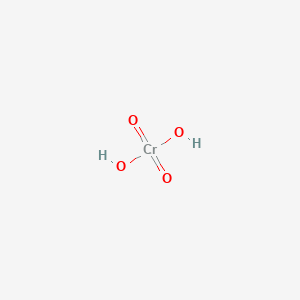
IUPAC Adıdihydroxy(dioxo)chromium
Molekül FormülüH2CrO4
Molekül Ağırlığı100.00 g/mol g/mol
SMILESO[Cr](=O)(=O)O
InChIKeyKRVSOGSZCMJSLX-UHFFFAOYSA-L
  • H271 May cause fire or explosion; strong Oxidizer
  • H300 Fatal if swallowed
  • H301 Toxic if swallowed
  • H310 Fatal in contact with skin
  • H311 Toxic in contact with skin
  • H312 Harmful in contact with skin
  • H314 Causes severe skin burns and eye damage
  • H317 May cause an allergic skin reaction
  • H318 Causes serious eye damage
  • H330 Fatal if inhaled
  • H334 May cause allergy or asthma symptoms or breathing difficulties if inhaled
  • H340 May cause genetic defects
  • H341 Suspected of causing genetic defects
  • H350 May cause cancer
  • H360 May damage fertility; May damage the unborn child
  • H361 Suspected of damaging fertility or the unborn child
  • H372 Causes damage to organs through prolonged or repeated exposure
  • H400 Very toxic to aquatic life
  • H410 Very toxic to aquatic life with long lasting effects

⚠️ Bilgi amaçlıdır; resmî SDS yerine geçmez.

Teklif & Detay İste