x
k
l
a
r
c
h
e
m


Diammonium Phosphate
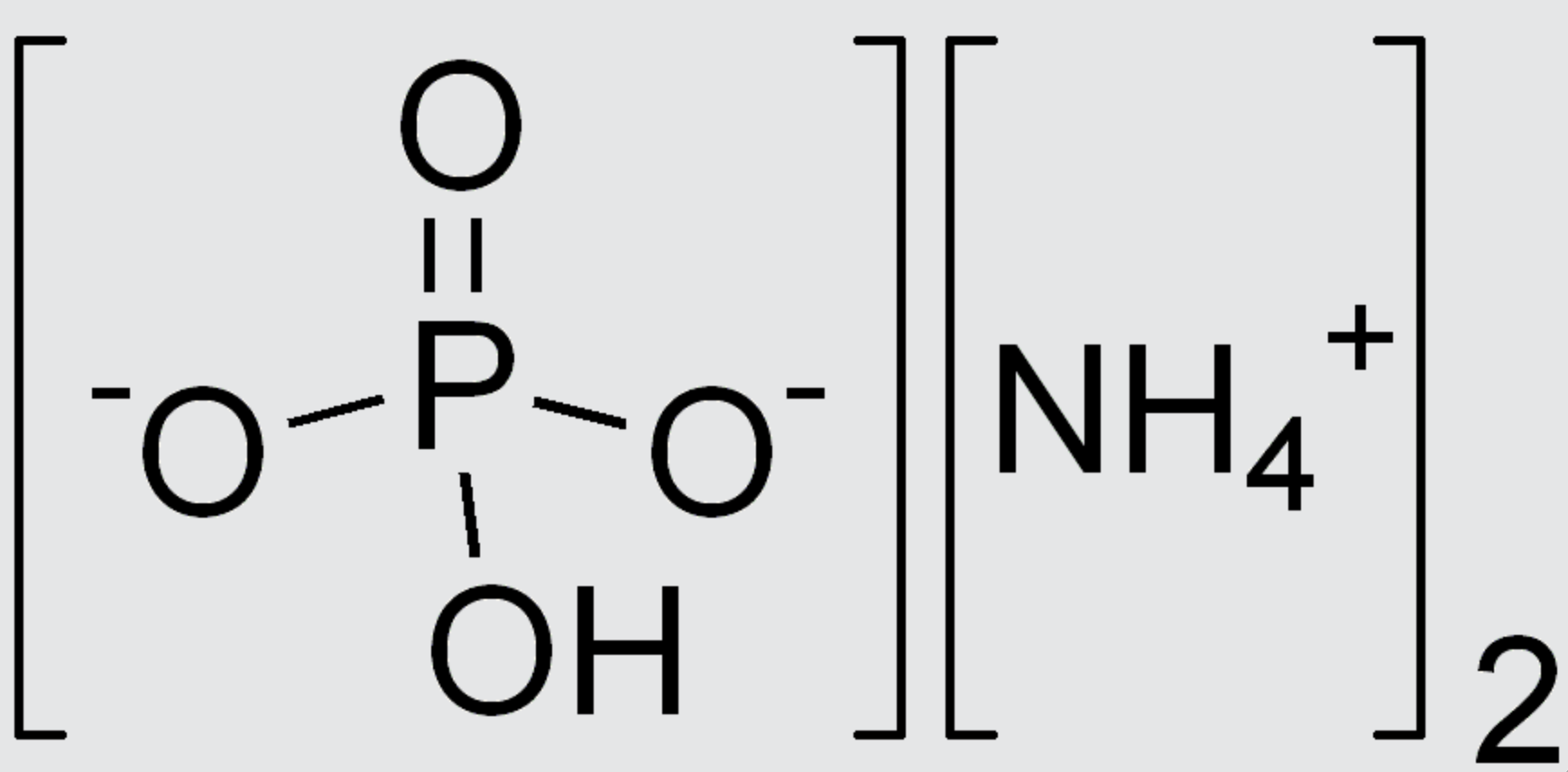
Chemical Product
Diammonium Phosphate
Physical and Chemical Properties:
| Properties | |
|---|---|
| Appearance | White crystalline solid |
| Odor | Odorless |
| Molecular Formula | (NH4)2HPO4 |
| Molecular Weight | 132.06 g/mol |
| Melting Point | Decomposes at 155 °C |
| Density | 1.619 g/cm³ |
| Solubility | Soluble in water |
| Flash Point | Not applicable |
| Chemical Stability | Stable under normal conditions, but should be kept away from acids |
Diammonium Phosphate is an inorganic compound used as a high-nitrogen fertilizer and as a flame retardant in various applications.
- Agriculture: Used extensively as a fertilizer due to its high nitrogen and phosphorus content.
- Chemical Manufacturing: Used as a precursor to produce other ammonium and phosphate compounds.
- Flame Retardant: Applied in the production of flame-retardant materials, particularly in textiles and plastics.
- Water Treatment: Used in water purification processes to reduce algae growth.
Physical and Chemical Properties:
| Properties | Data |
|---|---|
| Appearance | White crystalline solid |
| Odor | Odorless |
| Molecular Formula | (NH4)2HPO4 |
| Molecular Weight | 132.06 g/mol |
| Melting Point | Decomposes at 155 °C |
| Density | 1.619 g/cm³ |
| Solubility | Soluble in water |
| Flash Point | Not applicable |
| Chemical Stability | Stable under normal conditions, but should be kept away from acids |