sales@klarchem.com +90 530 315 00 65 Pzt–Cmt: 09:00 – 18:00

Perchloroethylene

Anasayfa/ Endüstriyel Kimyasallar/ Perchloroethylene
Perchloroethylene
Kimyasal Ürün

Perchloroethylene

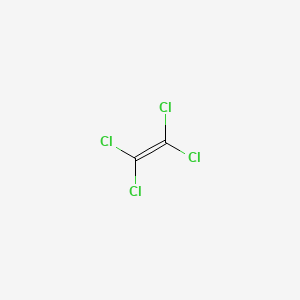
Molekül FormülüC2Cl4 CAS127-18-4 Molekül Ağırlığı165.83 g/mol g/mol
SinonimlerTetrachloroethylene, PCE
Güvenlik & Tehlike (GHS) Tehlike
Aşındırıcı Aşındırıcı Tahriş edici Tahriş edici Sağlık tehlikesi Sağlık tehlikesi Çevresel tehlike Çevresel tehlike

⚠️ Bilgi amaçlıdır; resmî Güvenlik Bilgi Formu (SDS) yerine geçmez.

Perchloroethylene (PCE) is a colorless, non-flammable liquid with a sweet, ether-like odor. It is widely used as a solvent in dry cleaning, degreasing, and chemical processing. PCE has excellent solvency power, making it effective for removing grease, oils, and dirt from various materials.
- Dry Cleaning Industry: Used as the primary solvent in dry cleaning operations. - Metal Degreasing: Removes grease and contaminants from metal parts. - Chemical Manufacturing: Used in the production of fluorinated compounds. - Textile Industry: Employed in fabric processing and dyeing. - Electronics Industry: Used for cleaning circuit boards and precision components.
AppearanceClear, colorless liquid
OdorSweet, ether-like odor
Molecular FormulaC2Cl4
Molecular Weight165.83 g/mol
Boiling Point121 °C
Density1.62 g/cm³
SolubilityInsoluble in water, soluble in organic solvents
Flash PointNon-flammable
Chemical StabilityStable under normal conditions
IUPAC Adı1,1,2,2-tetrachloroethene
Molekül FormülüC2Cl4
Molekül Ağırlığı165.83 g/mol g/mol
SMILESC(=C(Cl)Cl)(Cl)Cl
InChIKeyCYTYCFOTNPOANT-UHFFFAOYSA-N
  • H305 May be harmful if swallowed and enters airways
  • H313 May be harmful in contact with skin
  • H314 Causes severe skin burns and eye damage
  • H315 Causes skin irritation
  • H317 May cause an allergic skin reaction
  • H319 Causes serious eye irritation
  • H320 Causes eye irritation
  • H332 Harmful if inhaled
  • H336 May cause drowsiness or dizziness
  • H350 May cause cancer
  • H351 Suspected of causing cancer
  • H361 Suspected of damaging fertility or the unborn child
  • H362 May cause harm to breast-fed children
  • H370 Causes damage to organs
  • H372 Causes damage to organs through prolonged or repeated exposure
  • H373 May causes damage to organs through prolonged or repeated exposure
  • H401 Toxic to aquatic life
  • H411 Toxic to aquatic life with long lasting effects

⚠️ Bilgi amaçlıdır; resmî SDS yerine geçmez.

Teklif & Detay İste