sales@klarchem.com +90 530 315 00 65 Pzt–Cmt: 09:00 – 18:00

Trichloroethylene

Anasayfa/ Endüstriyel Kimyasallar/ Trichloroethylene
Trichloroethylene
Kimyasal Ürün

Trichloroethylene

Molekül FormülüC2HCl3 CAS79-01-6 Molekül Ağırlığı131.40 g/mol g/mol
SinonimlerTCE, Trichloroethene
Güvenlik & Tehlike (GHS) Tehlike
Tahriş edici Tahriş edici Sağlık tehlikesi Sağlık tehlikesi Çevresel tehlike Çevresel tehlike

⚠️ Bilgi amaçlıdır; resmî Güvenlik Bilgi Formu (SDS) yerine geçmez.

Trichloroethylene (TCE) is a colorless, volatile liquid with a chloroform-like odor. It is primarily used as an industrial solvent for degreasing metal parts and in the production of other chemicals. TCE is known for its high solvency and fast evaporation rate.
- Metal Cleaning & Degreasing: Used in vapor degreasing and precision cleaning. - Chemical Industry: Intermediate in the production of fluorinated compounds. - Adhesives & Coatings: Used in certain adhesives and coatings. - Pharmaceuticals: Employed as a solvent in chemical synthesis. - Textile Industry: Used in dry cleaning (historically, but now largely replaced).
AppearanceClear, colorless liquid
OdorChloroform-like
Molecular FormulaC2HCl3
Molecular Weight131.40 g/mol
Boiling Point87 °C
Density1.46 g/cm³
SolubilitySlightly soluble in water, soluble in organic solvents
Flash PointNon-flammable but decomposes at high temperatures
Chemical StabilityStable under normal conditions but reacts with strong bases and oxidizers
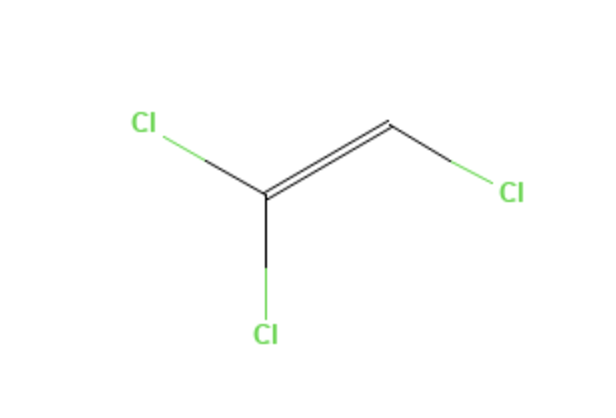
IUPAC Adı1,1,2-trichloroethene
Molekül FormülüC2HCl3
Molekül Ağırlığı131.40 g/mol g/mol
SMILESC(=C(Cl)Cl)Cl
InChIKeyXSTXAVWGXDQKEL-UHFFFAOYSA-N
  • H305 May be harmful if swallowed and enters airways
  • H315 Causes skin irritation
  • H317 May cause an allergic skin reaction
  • H319 Causes serious eye irritation
  • H332 Harmful if inhaled
  • H335 May cause respiratory irritation
  • H336 May cause drowsiness or dizziness
  • H341 Suspected of causing genetic defects
  • H350 May cause cancer
  • H360 May damage fertility or the unborn child
  • H361 Suspected of damaging fertility or the unborn child
  • H370 Causes damage to organs
  • H372 Causes damage to organs through prolonged or repeated exposure
  • H401 Toxic to aquatic life
  • H402 Harmful to aquatic life
  • H412 Harmful to aquatic life with long lasting effects

⚠️ Bilgi amaçlıdır; resmî SDS yerine geçmez.

Teklif & Detay İste