Corrosive
Acute toxic
Irritant
Health hazard
Environmental hazard
⚠️ For information only; not a substitute for the official Safety Data Sheet (SDS).
Potassium Cyanide is a highly toxic compound used primarily in gold extraction, electroplating, and in chemical synthesis.
- Gold Extraction: Used in cyanide leaching processes to extract gold from ores.
- Electroplating: Applied in the electroplating industry for the plating of metals.
- Chemical Manufacturing: Used in the synthesis of various chemicals, including cyanide derivatives.
- Laboratory Reagents: Used in chemical laboratories for synthetic reactions and analysis.
Appearance
White crystalline solid
Odor
Odorless
Molecular Formula
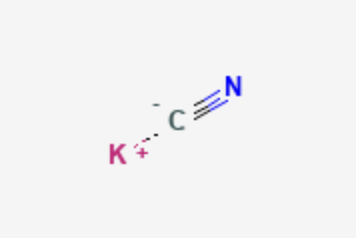
KCN
Molecular Weight
65.12 g/mol
Melting Point
634 °C
Density
1.52 g/cm³
Solubility
Soluble in water
Flash Point
Not applicable (highly toxic)
Chemical Stability
Stable under normal conditions, but decomposes in acid solutions
IUPAC Name
potassium cyanide
Molekulýar formula
KCN
Molekulýar agram
65.12 g/mol g/mol
SMILES
[C-]#N.[K+]
InChIKey
NNFCIKHAZHQZJG-UHFFFAOYSA-N
H290 May be corrosive to metals
H300 Fatal if swallowed, in contact with skin or if inhaled
H310 Fatal in contact with skin
H315 Causes skin irritation
H316 Causes mild skin irritation
H318 Causes serious eye damage
H319 Causes serious eye irritation
H330 Fatal if inhaled
H335 May cause respiratory irritation
H361 Suspected of damaging fertility or the unborn child
H370 Causes damage to organs
H371 May cause damage to organs
H372 Causes damage to organs through prolonged or repeated exposure
H400 Very toxic to aquatic life
H410 Very toxic to aquatic life with long lasting effects
H412 Harmful to aquatic life with long lasting effects
⚠️ For information only; not a substitute for the official SDS.
