Flammable
Corrosive
Acute toxic
Irritant
Health hazard
⚠️ For information only; not a substitute for the official Safety Data Sheet (SDS).
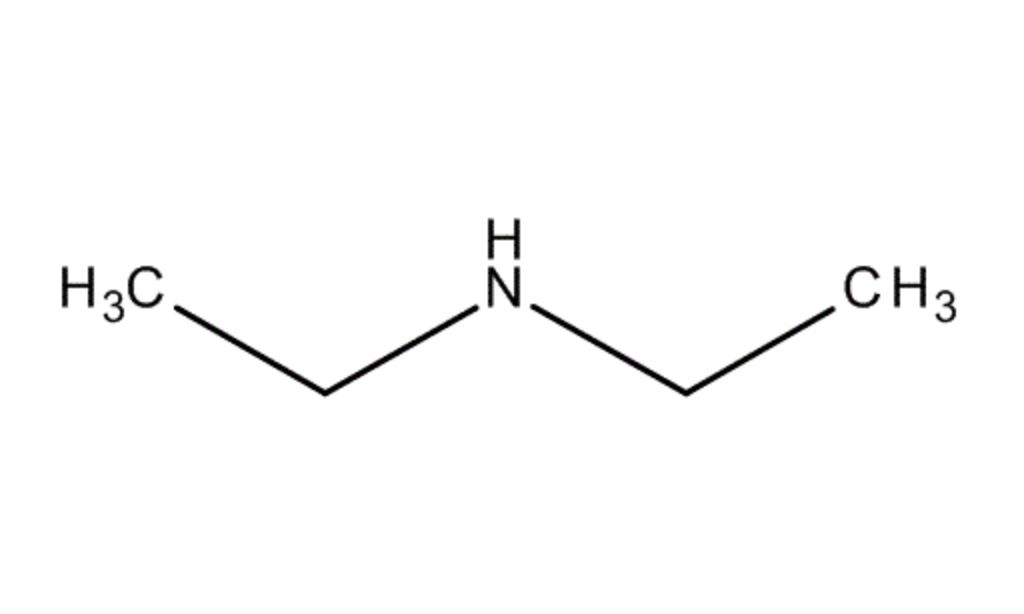
Diethylamine is a colorless liquid with a strong ammonia-like odor, used in chemical synthesis, pharmaceuticals, and as a solvent.
- Chemical Synthesis: Used in the manufacture of other chemicals, including herbicides, fungicides, and surfactants.
- Pharmaceuticals: Applied as an intermediate in the production of drugs and as a local anesthetic.
- Agriculture: Used in the formulation of herbicides and insecticides.
- Solvent: Used as a solvent in various industrial processes and as a catalyst in certain chemical reactions.
Appearance
Colorless liquid
Odor
Ammonia-like, strong odor
Molecular Formula
C4H11N
Molecular Weight
73.14 g/mol
Boiling Point
55.1 °C
Density
0.713 g/cm³
Solubility
Miscible with water, alcohol, and ether
Flash Point
-27.5 °C
Chemical Stability
Stable under normal conditions, but highly flammable and should be stored away from heat and open flames
IUPAC Name
N-ethylethanamine
Summenformel
C4H11N
Molekulargewicht
73.14 g/mol g/mol
SMILES
CCNCC
InChIKey
HPNMFZURTQLUMO-UHFFFAOYSA-N
H225 Highly Flammable liquid and vapor
H301 Toxic if swallowed, in contact with skin or if inhaled
H302 Harmful if swallowed
H311 Toxic in contact with skin
H312 Harmful in contact with skin
H314 Causes severe skin burns and eye damage
H318 Causes serious eye damage
H331 Toxic if inhaled
H332 Harmful if inhaled
H335 May cause respiratory irritation
H370 Causes damage to organs
H371 May cause damage to organs
H372 Causes damage to organs through prolonged or repeated exposure
H401 Toxic to aquatic life
⚠️ For information only; not a substitute for the official SDS.
