sales@klarchem.com +90 530 315 00 65 Mon–Sat: 09:00 – 18:00

Acetonitrile

Home/ Industrial Chemicals/ Acetonitrile
Acetonitrile
Chemical Product

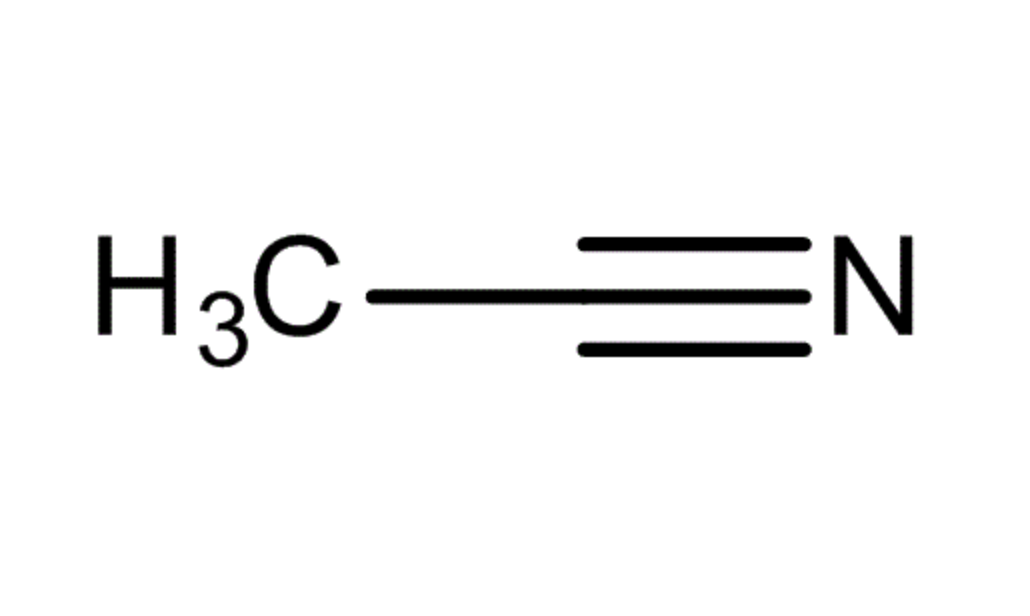
Acetonitrile

Molecular FormulaCH3CN CAS75-05-8 Molecular Weight41.05 g/mol g/mol
SynonymsMethyl cyanide
Safety & Hazards (GHS) Danger
Flammable Flammable Corrosive Corrosive Acute toxic Acute toxic Irritant Irritant Health hazard Health hazard

⚠️ For information only; not a substitute for the official Safety Data Sheet (SDS).

Acetonitrile is an organic solvent used in a variety of chemical processes, including in the pharmaceutical, petrochemical, and electronics industries.
- Chemical Manufacturing: Used as a solvent in the production of pharmaceuticals, adhesives, and paints. - Electronics: Applied in the manufacture of electronics, especially in the production of polyacrylonitrile fibers. - Petrochemicals: Used as a solvent in the extraction of butadiene and other petrochemical products. - Laboratory Reagents: Applied as a solvent in chemical laboratories, especially for high-performance liquid chromatography (HPLC).
AppearanceColorless liquid
OdorMild, slightly sweet odor
Molecular FormulaCH3CN
Molecular Weight41.05 g/mol
Boiling Point81.6 °C
Density0.786 g/cm³
SolubilityMiscible with water, ethanol, ether, acetone
Flash Point2.5 °C
Chemical StabilityStable under normal conditions but highly flammable
IUPAC Nameacetonitrile
Molecular FormulaCH3CN
Molecular Weight41.05 g/mol g/mol
SMILESCC#N
InChIKeyWEVYAHXRMPXWCK-UHFFFAOYSA-N
  • H225 Highly Flammable liquid and vapor
  • H302 Harmful if swallowed
  • H303 May be harmful if swallowed
  • H311 Toxic in contact with skin
  • H312 Harmful in contact with skin
  • H318 Causes serious eye damage
  • H319 Causes serious eye irritation
  • H332 Harmful if inhaled
  • H341 Suspected of causing genetic defects
  • H370 Causes damage to organs
  • H373 May causes damage to organs through prolonged or repeated exposure

⚠️ For information only; not a substitute for the official SDS.

Request Offer & Detail