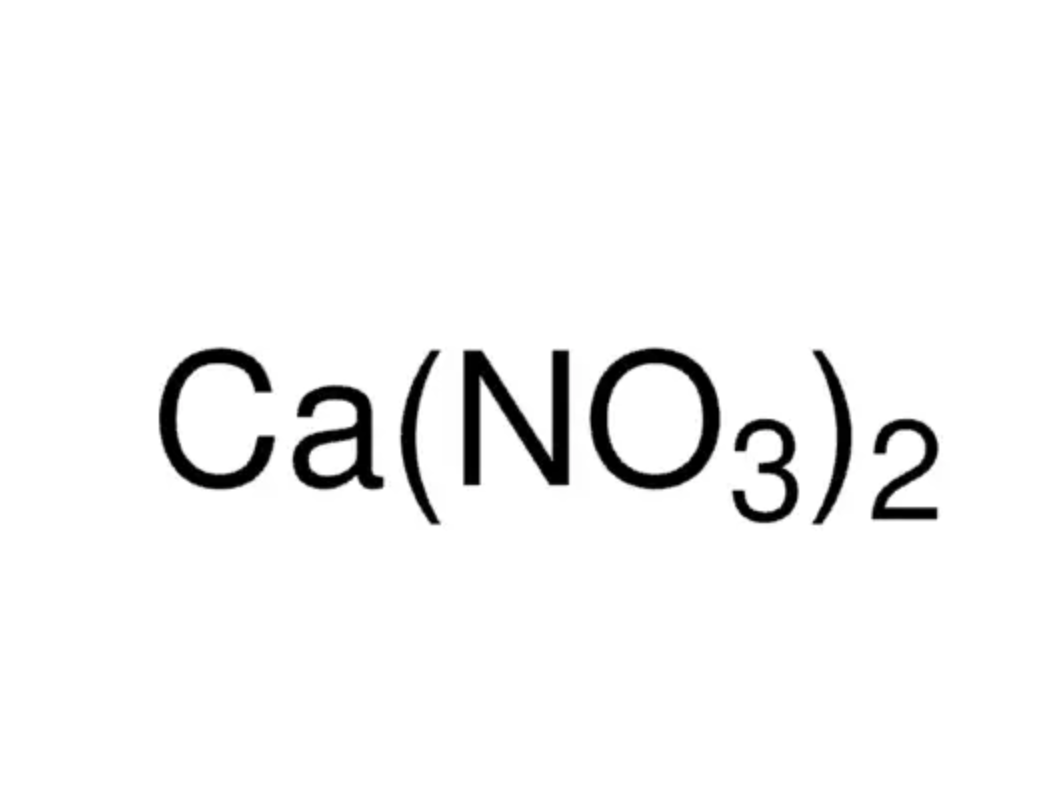
Formule moléculaireCa(NO3)2CAS10124-37-5Masse moléculaire164.10 g/mol g/mol
SynonymesCalcium Dinitrate, Nitrate of Lime
Safety & Hazards (GHS)
Danger
Oxidizing
Corrosive
Irritant
Health hazard
⚠️ For information only; not a substitute for the official Safety Data Sheet (SDS).
Calcium Nitrate is a chemical compound that is commonly used as a fertilizer and in the production of other chemicals. It is highly soluble in water and has applications in agriculture, construction, and water treatment.
- Agriculture: Used as a fertilizer to provide calcium and nitrogen to plants.
- Construction: Used in concrete for its accelerating effects and to reduce shrinkage.
- Water Treatment: Used to remove impurities and prevent scaling in water treatment processes.
- Chemical Manufacturing: Used in the production of other chemicals like calcium ammonium nitrate.
- Fireworks: Used as an oxidizing agent in fireworks and explosives.
Appearance
White crystalline solid
Odor
Odorless
Molecular Formula
Ca(NO3)2
Molecular Weight
164.10 g/mol
Melting Point
561 °C
Density
1.82 g/cm³
Solubility
Highly soluble in water
pH (1% solution)
6.0 - 7.0
Chemical Stability
Stable under normal conditions, but hygroscopic
IUPAC Name
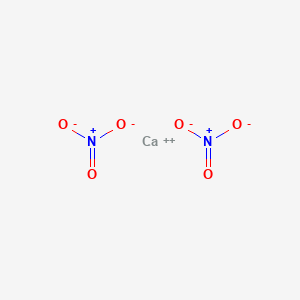
calcium dinitrate
Formule moléculaire
Ca(NO3)2
Masse moléculaire
164.10 g/mol g/mol
SMILES
[N+](=O)([O-])[O-].[N+](=O)([O-])[O-].[Ca+2]
InChIKey
ZCCIPPOKBCJFDN-UHFFFAOYSA-N
H272 May intensify fire; oxidizer
H290 May be corrosive to metals
H302 Harmful if swallowed
H314 Causes severe skin burns and eye damage
H315 Causes skin irritation
H318 Causes serious eye damage
H319 Causes serious eye irritation
H332 Harmful if inhaled
H370 Causes damage to organs
H372 Causes damage to organs through prolonged or repeated exposure
⚠️ For information only; not a substitute for the official SDS.
