sales@klarchem.com +90 530 315 00 65 Lun–Sam : 09h00 – 18h00

Diethanolamine

Diethanolamine
Produit chimique

Diethanolamine

Formule moléculaireC4H11NO2 CAS111-42-2 Masse moléculaire105.14 g/mol g/mol
SynonymesDEA, 2,2'-Iminodiethanol, Diolamine
Safety & Hazards (GHS) Danger
Corrosive Corrosive Irritant Irritant Health hazard Health hazard

⚠️ For information only; not a substitute for the official Safety Data Sheet (SDS).

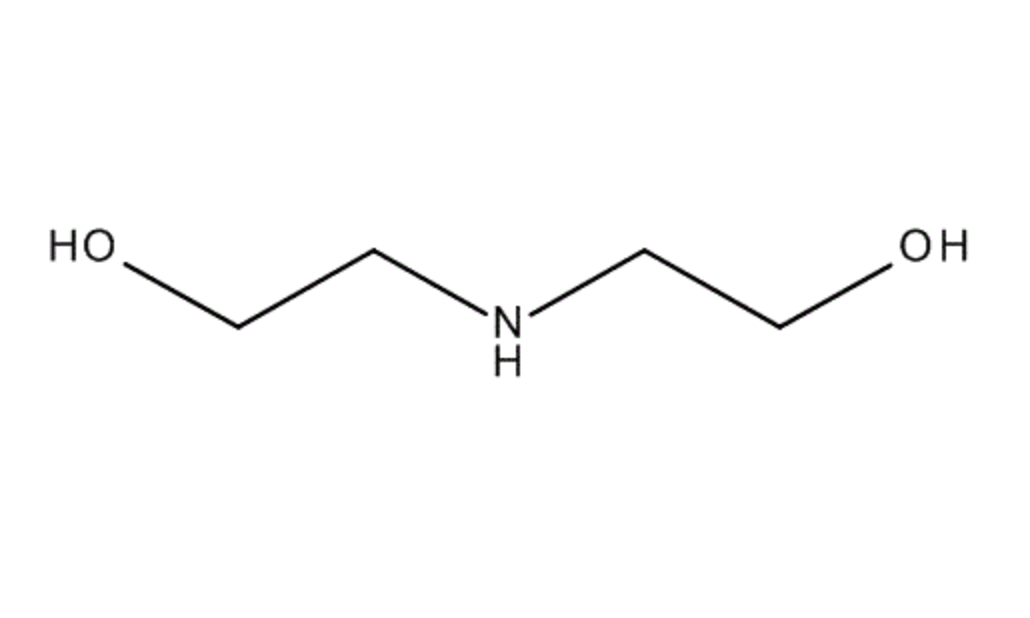
Diethanolamine (DEA) is an organic compound that is both a secondary amine and a diol, appearing as a clear, colorless liquid or solid at lower temperatures. It is widely used in personal care products, detergents, gas treatment, and industrial processes due to its surfactant, emulsifying, and neutralizing properties.
- Personal Care: Used in shampoos, lotions, and cosmetics as an emulsifier. - Detergent Industry: Component in liquid laundry detergents and dishwashing liquids. - Gas Treatment: Used in gas scrubbing to remove acidic impurities (acid gases). - Metalworking: Employed in metalworking fluids. - Pharmaceuticals: Used in certain drug formulations as a pH adjuster.
AppearanceClear, colorless liquid (solid at low temperatures)
OdorAmmonia-like
Molecular FormulaC4H11NO2
Molecular Weight105.14 g/mol
Boiling Point268 °C
Density1.09 g/cm³
SolubilityCompletely soluble in water
pH (1% solution)11.0 - 12.0
Chemical StabilityStable under normal conditions
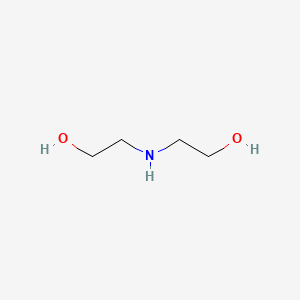
IUPAC Name2-(2-hydroxyethylamino)ethanol
Formule moléculaireC4H11NO2
Masse moléculaire105.14 g/mol g/mol
SMILESC(CO)NCCO
InChIKeyZBCBWPMODOFKDW-UHFFFAOYSA-N
  • H302 Harmful if swallowed
  • H315 Causes skin irritation
  • H317 May cause an allergic skin reaction
  • H318 Causes serious eye damage
  • H335 May cause respiratory irritation
  • H336 May cause drowsiness or dizziness
  • H351 Suspected of causing cancer
  • H361 Suspected of damaging fertility or the unborn child
  • H370 Causes damage to organs
  • H371 May cause damage to organs
  • H372 Causes damage to organs through prolonged or repeated exposure
  • H373 May causes damage to organs through prolonged or repeated exposure
  • H401 Toxic to aquatic life
  • H412 Harmful to aquatic life with long lasting effects

⚠️ For information only; not a substitute for the official SDS.

Demander un devis & des détails