sales@klarchem.com +90 530 315 00 65 Lun–Sam : 09h00 – 18h00

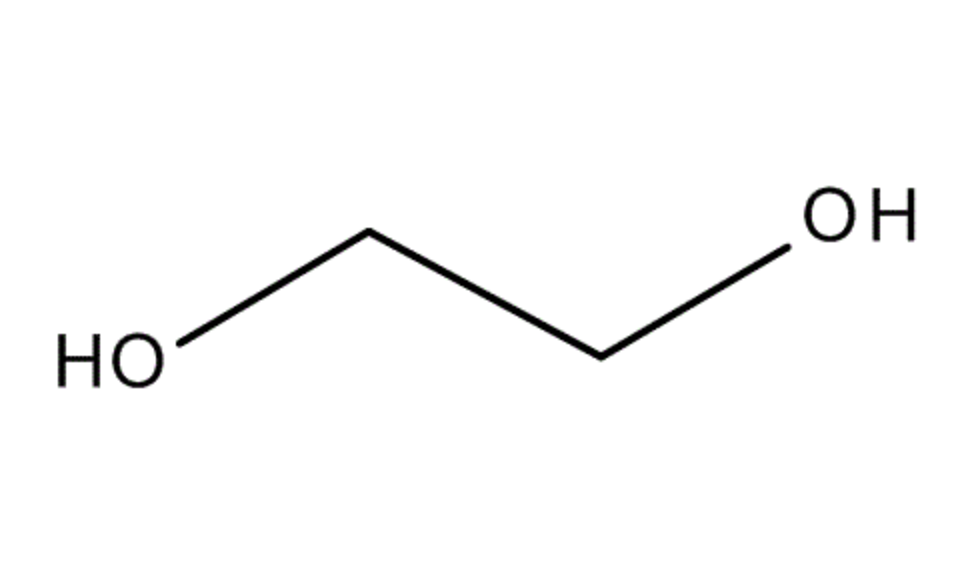
Mono Ethylene Glycol

Accueil/ Produits chimiques industriels/ Mono Ethylene Glycol
Mono Ethylene Glycol
Produit chimique

Mono Ethylene Glycol

Formule moléculaireC2H6O2 CAS107-21-1 Masse moléculaire62.07 g/mol g/mol
SynonymesEthylene Glycol, MEG
Safety & Hazards (GHS) Danger
Irritant Irritant Health hazard Health hazard

⚠️ For information only; not a substitute for the official Safety Data Sheet (SDS).

Mono Ethylene Glycol (MEG) is a colorless, odorless, and sweet-tasting liquid used in antifreeze formulations, coolants, and as a chemical intermediate in the production of polyester fibers and resins.
- Antifreeze: Used in antifreeze formulations for vehicles and industrial cooling systems. - Polyester Production: Applied in the production of polyethylene terephthalate (PET) resins. - Pharmaceuticals: Used as a solvent and in drug formulations. - Cosmetics: Used in skin care formulations and moisturizers.
AppearanceColorless, odorless liquid
OdorSweet odor
Molecular FormulaC2H6O2
Molecular Weight62.07 g/mol
Boiling Point197.6 °C
Density1.113 g/cm³
SolubilityMiscible with water, ethanol, and acetone
Flash Point111.8 °C
Chemical StabilityStable under normal conditions, but toxic if ingested
IUPAC Nameethane-1,2-diol
Formule moléculaireC2H6O2
Masse moléculaire62.07 g/mol g/mol
SMILESC(CO)O
InChIKeyLYCAIKOWRPUZTN-UHFFFAOYSA-N
  • H302 Harmful if swallowed
  • H303 May be harmful if swallowed
  • H315 Causes skin irritation
  • H316 Causes mild skin irritation
  • H320 Causes eye irritation
  • H332 Harmful if inhaled
  • H335 May cause respiratory irritation
  • H336 May cause drowsiness or dizziness
  • H360 May damage fertility or the unborn child
  • H370 Causes damage to organs
  • H372 Causes damage to organs through prolonged or repeated exposure
  • H373 May causes damage to organs through prolonged or repeated exposure

⚠️ For information only; not a substitute for the official SDS.

Demander un devis & des détails