⚠️ For information only; not a substitute for the official Safety Data Sheet (SDS).
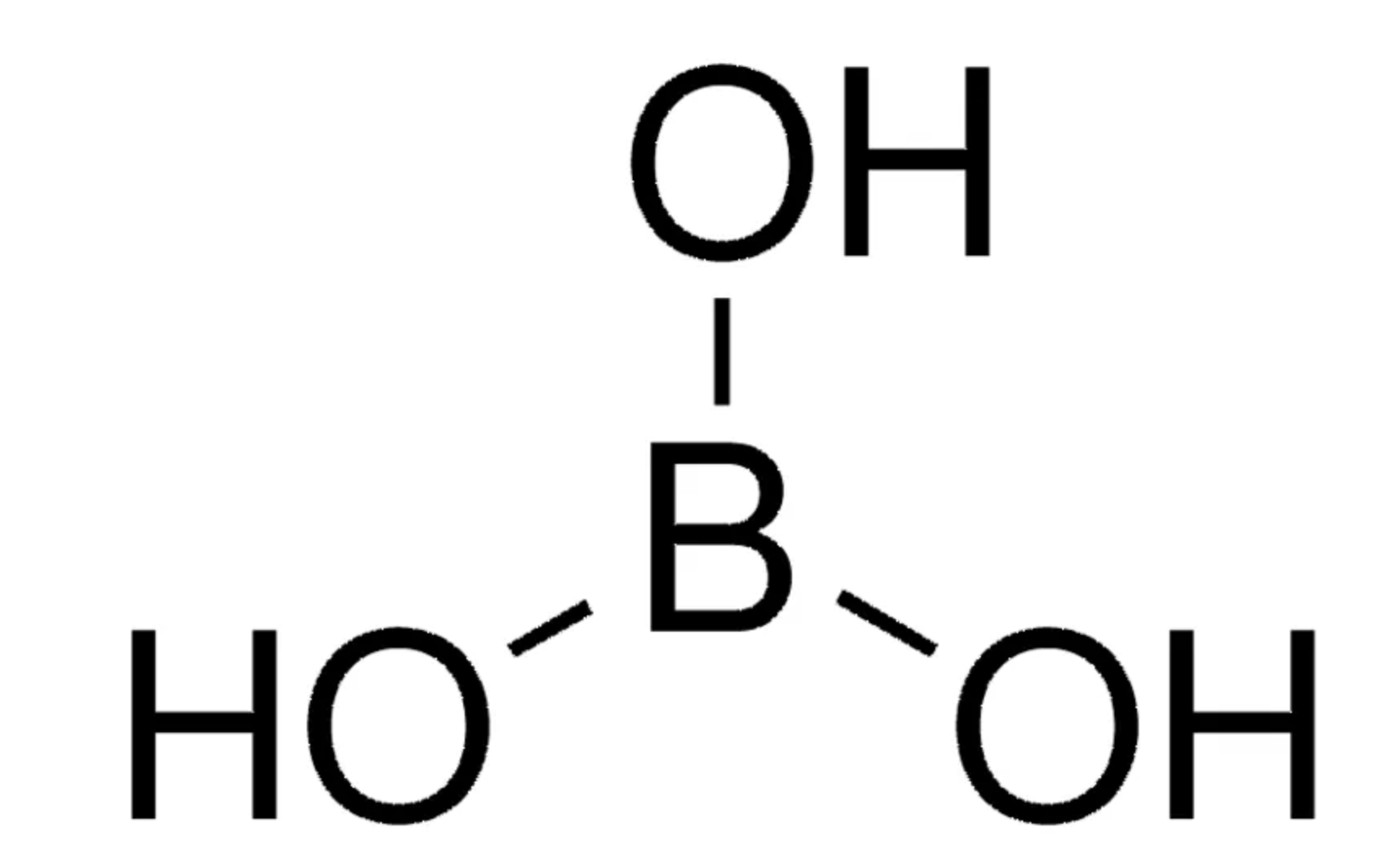
Boric Acid is a weak, monobasic Lewis acid of boron, appearing as a white crystalline powder or granules. It is soluble in water and widely used in industries such as ceramics, glass, agriculture, pharmaceuticals, and cosmetics. Its antifungal and antibacterial properties make it a versatile product for various applications.
- Ceramics and Glass Industry: Used in glazes and glass production.
- Agriculture: Acts as a micronutrient in fertilizers.
- Pharmaceuticals: Used in eye washes, antiseptics, and ointments.
- Cosmetics: Found in skin creams, powders, and other personal care products.
- Flame Retardants: Used in the production of flame retardant materials.
- Industrial Applications: Serves as a pH buffer and corrosion inhibitor.
Appearance
White crystalline powder or granules
Odor
Odorless
Molecular Formula
H3BO3
Molecular Weight
61.83 g/mol
Melting Point
170.9 °C
Density
1.44 g/cm³
Solubility
Soluble in water
pH (1% solution)
5.0 - 6.0
Chemical Stability
Stable under normal conditions
IUPAC Name
boric acid
Molekulyar formula
H3BO3
Molekulyar og‘irlik
61.83 g/mol g/mol
SMILES
B(O)(O)O
InChIKey
KGBXLFKZBHKPEV-UHFFFAOYSA-N
H303 May be harmful if swallowed
H315 Causes skin irritation
H319 Causes serious eye irritation
H335 May cause respiratory irritation
H360 May damage fertility; May damage the unborn child
H370 Causes damage to organs
H372 Causes damage to organs through prolonged or repeated exposure
H402 Harmful to aquatic life
⚠️ For information only; not a substitute for the official SDS.
